
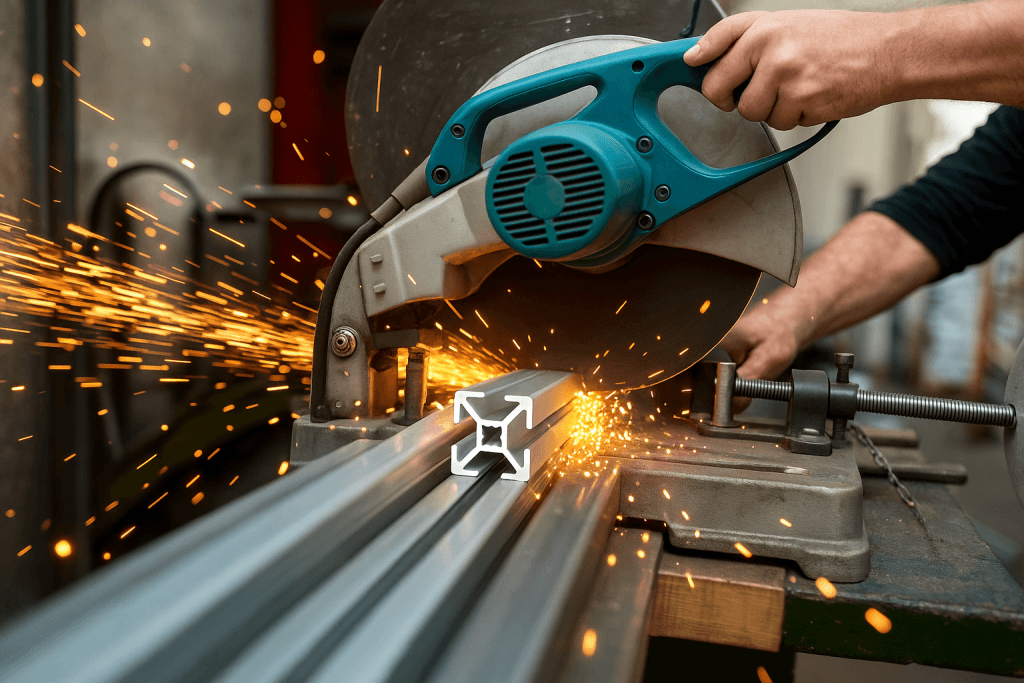
Cutting T-Slot Aluminum Extrusions: Tools, Feeds & Speeds
17 February 2026T-slot aluminum extrusions are one of the most popular modular framing materials for building enclosures, machine frames, 3D printers, and automation equipment. But no matter what you’re building, you’ll eventually face a critical step: cutting your aluminum extrusions to length.
If you’re wondering how to cut 2020 aluminum extrusion (or other sizes like 3030, 4040, and 8020) cleanly and accurately, this guide covers the best tools, feeds, and speeds to get professional results every time.
Choosing the Right Tool for Cutting
The tool you use can make the difference between a clean, square cut and a rough edge that needs extra deburring. Here are the most common options:
1. Miter Saw (Recommended)
- Best for: Straight, accurate cuts on 2020, 3030, 4040, and larger extrusions
- Blade type: 10”–12” carbide-tipped non-ferrous metal blade with 80+ teeth
- Pros: Fast, accurate, repeatable cuts — ideal for production or large projects
- Tips: Clamp securely, use light feed pressure, and apply cutting wax or lubricant to reduce burrs
2. Bandsaw
- Best for: High-volume cutting or very large profiles
- Blade selection: 10–14 TPI bi-metal blade for aluminum
- Pros: Good for cutting multiple profiles at once, quieter than a miter saw
- Tips: Maintain proper blade tension and use slow, controlled feed rates
3. Hacksaw or Manual Saw
- Best for: Small projects or quick one-off cuts
- Pros: Low cost, no power tools required
- Cons: Slower, less precise — square cuts are harder to achieve
- Tips: Use a fine-tooth blade (24 TPI or higher) and a miter box to stay square
Feeds, Speeds, and Cutting Technique
To get clean, accurate cuts with minimal burrs:
- Feed slowly and steadily: For power saws, let the blade do the work — don’t force it
- Use proper speed: For miter saws, a higher blade RPM (3,000–6,000 RPM) with a carbide blade is ideal
- Support your workpiece: Use roller stands or a workbench to keep the extrusion from vibrating
- Deburr after cutting: Use a deburring tool, file, or flap wheel to remove sharp edges and ensure a clean fit
Cutting Different T-Slot Sizes
While the basic process is the same, here are a few notes for common profiles:
- How to Cut 2020 Aluminum Extrusion: Light pressure and a fine-tooth carbide blade work best. Because it’s small, secure it well to avoid movement.
- Cutting 3030 or 4040: Slightly heavier feed is okay. Watch for blade deflection on thicker walls.
- Cutting 8020 or Larger: Use a slower feed rate and plenty of support for long pieces to maintain accuracy.
Safety Considerations
Cutting aluminum extrusions creates chips and noise. Always:
- Wear safety glasses and hearing protection
- Use clamps to secure workpieces
- Keep hands clear of the blade path
- Clean chips frequently to avoid buildup around the saw
Pro Tips for Perfect Cuts
- Mark your cuts carefully: Use a square and a fine-tip marker for accuracy
- Make test cuts: Verify your saw is cutting square before cutting production pieces
- Batch similar cuts: Cutting all pieces of the same length in one setup saves time and improves consistency
Final Thoughts
Whether you’re cutting 2020 aluminum extrusion for a 3D printer frame or large 4040 profiles for a machine enclosure, using the right tools and technique is key to a professional result.
By following these tips for tools, feeds, and speeds, you’ll get clean, accurate cuts that make assembly easier and help your finished project look and perform its best.